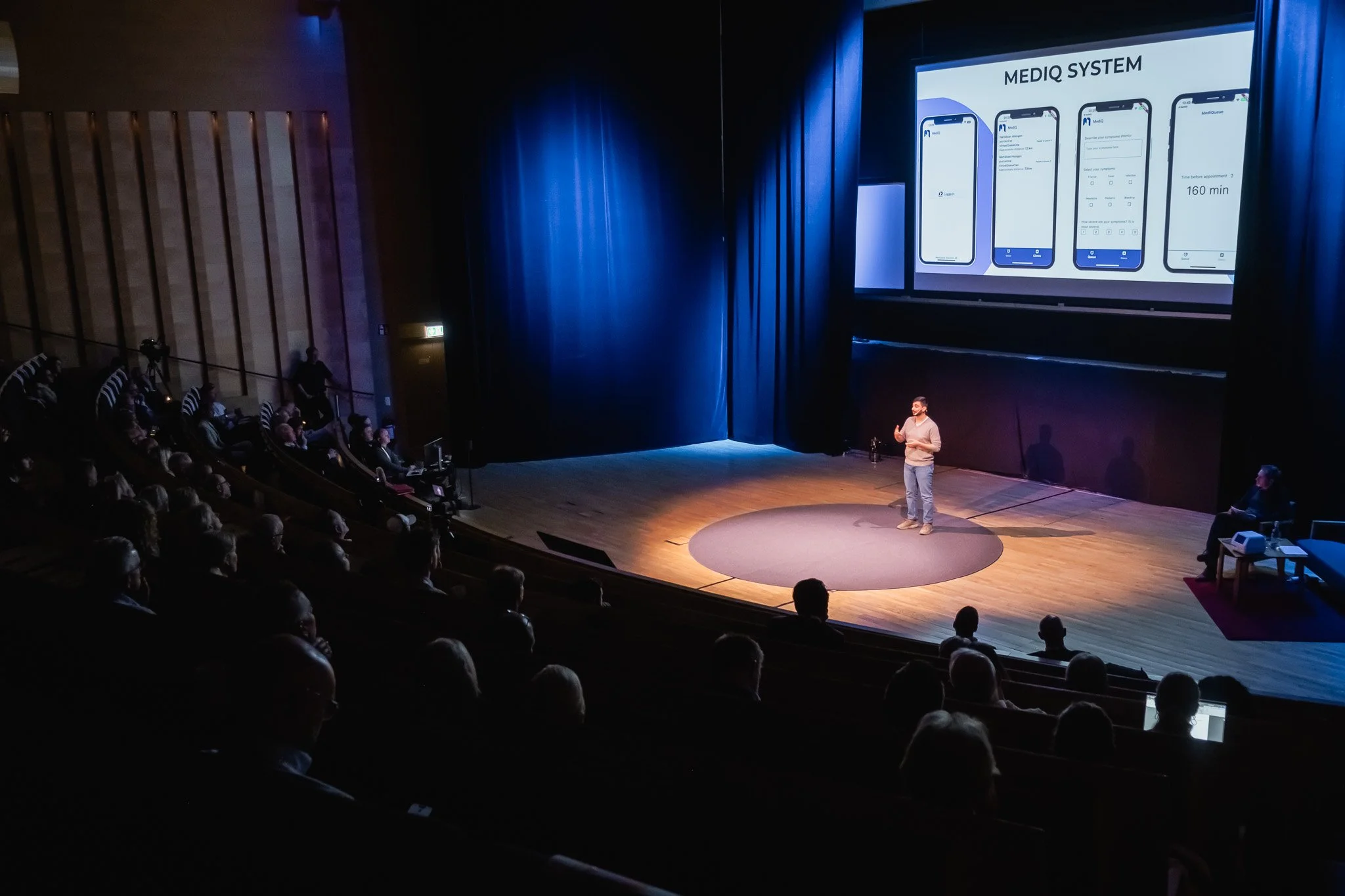
From eight hours in the waiting room to a new solution for emergency care – Mediqueue tested in Värmland
The Värmland-based startup Mediqueue is developing a system designed to make waiting times more predictable – for both patients and healthcare staff.
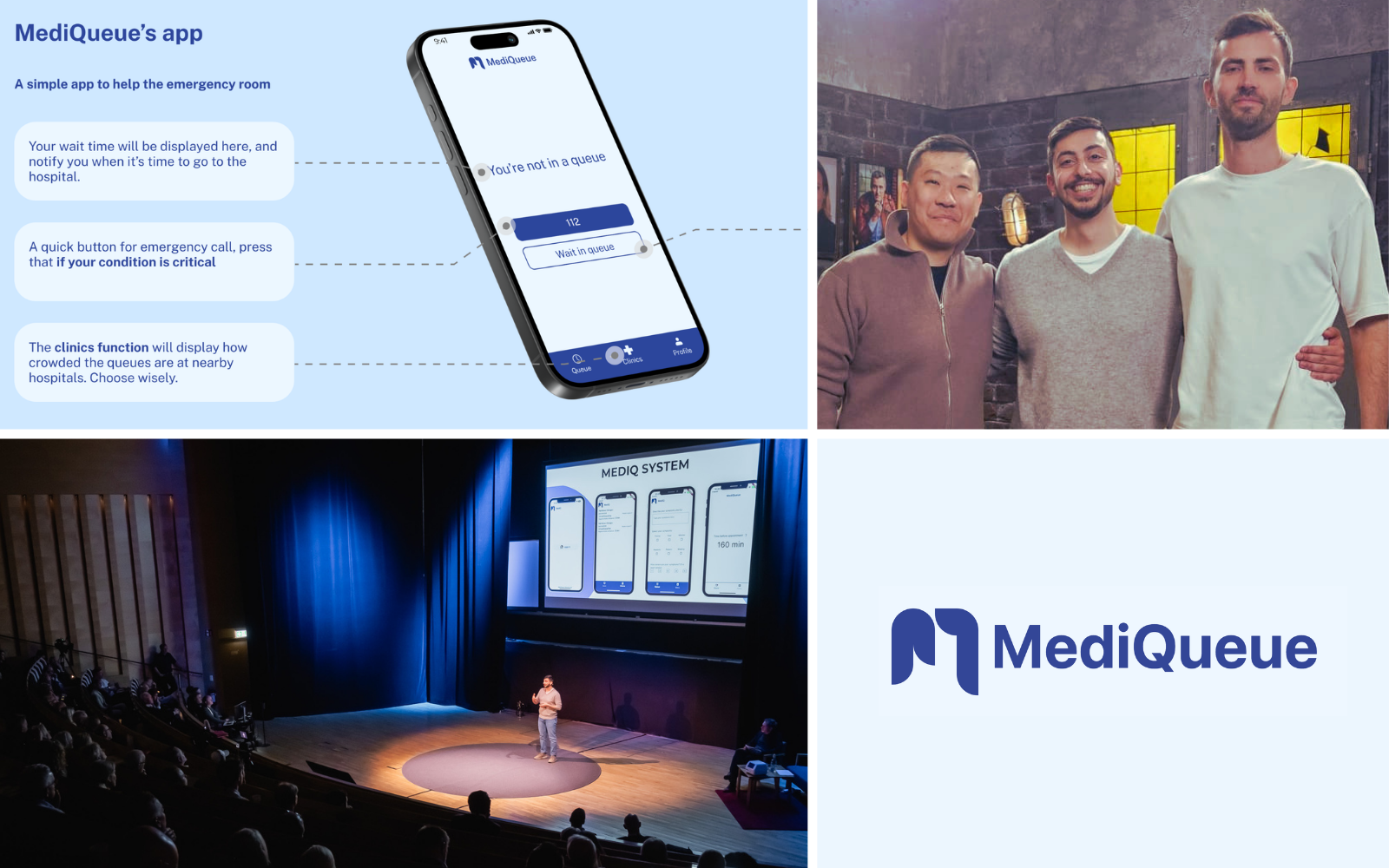
Spending hours in the waiting room at an emergency department is an experience many patients recognize.
For Mohamed Eid Kabbani, one such experience became the starting point for an idea that would later develop into the startup Mediqueue.
As a teenager in Germany, he once spent more than eight hours in the emergency department with glass in his foot. When he was finally treated, the procedure took only a few minutes.
“I remember thinking even then that it shouldn’t have to be like this,” says Mohamed.
Later, during medical school and in his work within healthcare, he saw the same situation repeated time and again: patients waiting for long periods without knowing how long it would take, while healthcare staff lacked effective tools to gain a clear overview of patient flow.
“It’s not individual doctors or nurses causing the waiting times. It’s a system problem.”
Out of those experiences, the idea for Mediqueue emerged – a digital solution aimed at making waiting times in emergency care more predictable for both patients and healthcare staff.
A system designed to manage waiting times more effectively
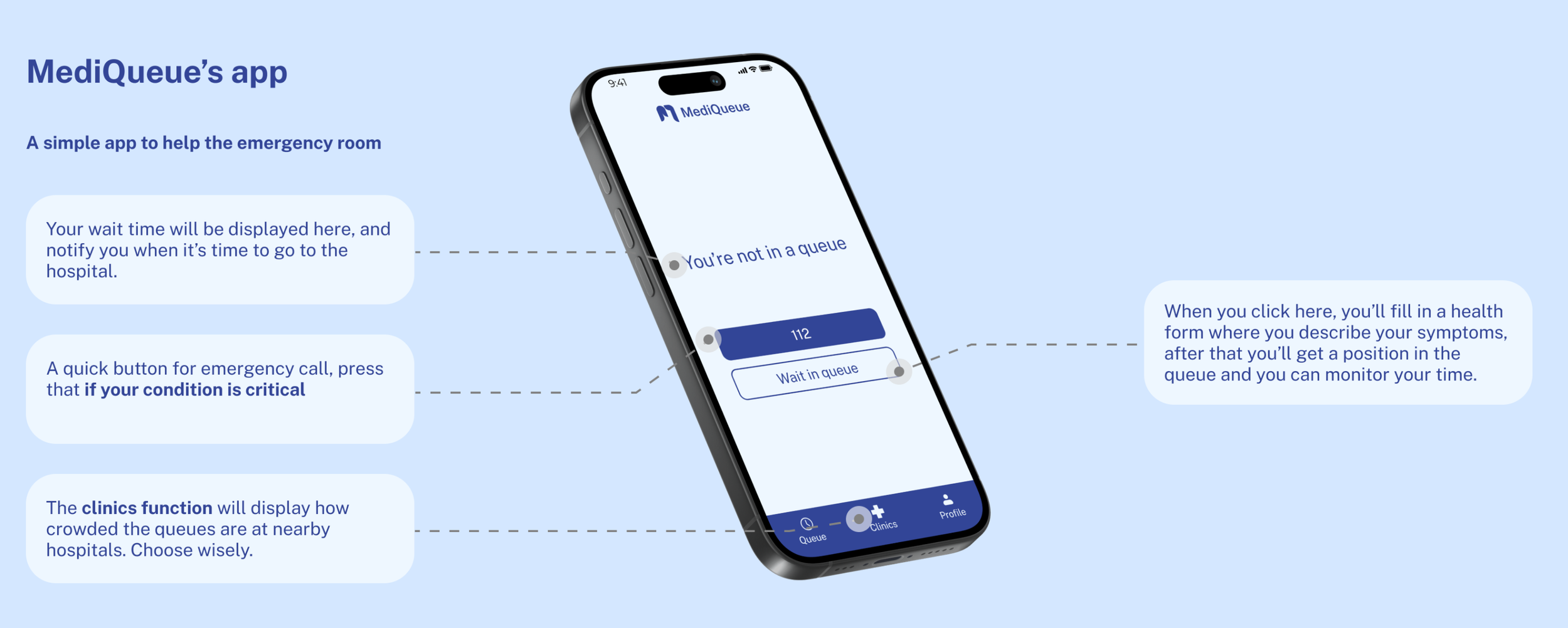
Mediqueue aims to make waiting times more transparent and flexible.
Through the system, patients can gain a clearer picture of waiting conditions at different emergency departments and, in some cases, choose to wait somewhere other than an overcrowded waiting room until their turn approaches.
At the same time, healthcare staff gain a clearer overview of patients who are on their way to the department and the reasons they are seeking care – making it easier to plan workloads and prioritize the right patients.
“In one sentence, I usually say that we want to remove the waiting room,” says Mohamed.
Developed together with healthcare providers in Värmland
Today, Mediqueue is being tested together with Region Värmland, primarily in Karlstad. Here, the solution is developed in close dialogue with healthcare professionals in their daily clinical work, with the aim of creating a system that works in practice – not just in theory.
During the testing, the team has also made several new discoveries.
One insight is that when patients who can wait elsewhere receive better information about their waiting time, it can create more room to prioritize older and more vulnerable patients. It can also reduce the need for patients to spend long periods waiting in crowded waiting rooms.
“At first, our idea was simply to digitalize queue management. But during testing, we realized that the solution can actually improve the overall situation in the emergency department,” says Mohamed.
From idea to testing in a real-world environment
The journey from idea to testing has not been straightforward. One of the biggest challenges was finding the first organization willing to test the solution.
“Many people think the idea sounds good, but no one wants to be the first to try something new,” says Mohamed.
Through their work with DigitalWell Ventures, the team received support to further develop the idea, build the company, and take the first steps toward testing the solution in a real healthcare environment.
The collaboration has also made it possible to develop the solution in close dialogue with healthcare providers in Värmland – something that has been crucial in ensuring the system works in practice.
Next steps
Today, Mediqueue continues to develop and test the solution together with healthcare providers in Värmland, while several other regions are following the development with interest.
If the system proves successful, it could contribute to a more predictable and less stressful experience for patients seeking emergency care – while also providing healthcare staff with better tools to manage complex patient flows.
At the same time, the work demonstrates how digital innovation can be developed in close collaboration with healthcare – and how solutions to complex societal challenges can take shape in practice.